
Many years ago I decided that I wanted to write music for documentaries, films and moving images. With music, I’ve always found myself thinking in terms of visuals: colours, textures, landscapes and the shapes of sound.
From a young age I was fascinated with the correlation between sound and picture. Films and music are powerful mediums that visit you at a young age and have a lasting impact on your memories. Some of my most vivid memories from childhood come from a time when my senses were overloaded with dazzling visuals and immersive soundtracks, jumping out of the darkness of a movie theatre.
So this post is about 10 atmospheric movie soundtracks which were hugely influential to me in wanting to write music for moving images. Films that cemented themselves firmly in my brain as being as rich in sound as they were in visuals. A few of these I saw as a child (Blade Runner in particular) while others are more recent examples. I could easily have picked another 50 films but they’re all classic examples of what inspired me (and continue to inspire me) to write music for visuals and films.
For each film I’ve included a short sample from some of my favourite parts of the soundtrack, but I would definitely encourage you to check out the full scores if you’re not already familiar with them. So, not in any order at all, here are 10 of my favourites:
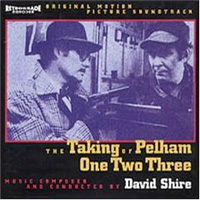 The Taking Of Pelham 123 (1974)
David Shire: Main Title
Director: Joseph Sargent
Composer: David Shire
Get it from Amazon
Massively funky & gritty 70’s score with an unbelievable dirty low-end in the horns and fat bass ostinatos; one of my absolute all time favourites. Aiming for a sound that was “New York jazz-oriented, hard edged”, Shire ended up basing the score on Schoenberg’s twelve tone method which gave the sound a kind of organised chaos without a definite tonal centre – basically a sinister and threatening jazz/funk score that’s full of menace. There’s something about the gritty vibe and music of movies from this period that I love: The French Connection, Serpico, Dirty Harry, Capricorn One, Marathon Man, Black Sunday etc. A hugely underrated composer, I also love and highly recommend Shire’s haunting, melancholy and eerily discordant piano-based score for Francis Ford Coppola’s excellent The Conversation starring Gene Hackman (1974) and more recently David Fincher’s Zodiac (2007).
 Memento (2000)
David Julyan: Memento Main Theme
Director: Christopher Nolan
Composer: David Julyan
Get it from Amazon
Proof that every so often, independent cinema can come up with a modern classic on a shoestring budget (well, $5m, but peanuts by industry standards). David Julyan’s score to Memento is a fitting combination of glitchy nervous sound effects and slow haunting melancholic strings (which became a recurring sound in much of his successive work on other films with Chris Nolan, e.g. The Prestige, Insomnia etc.) For a while it seemed to be almost de facto for independent directors to cite this score as an influence in what they were looking for when on the lookout for a composer. In fact it still crops up as a musical inspiration on many film job briefs to this day, the sign of a highly effective score.
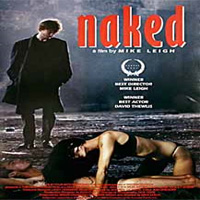 Naked (1993)
Andrew Dickson: Naked Title Music
Director: Mike Leigh
Composer: Andrew Dickson
Still my favourite Mike Leigh film, Naked is, let’s be frank, a fairly bleak tale. Dark, brutal and unsettling but bristling with amazing fast-paced dialogue and stellar performances from David Thewlis and Katrin Cartlidge (much of the final dialogue was improvised in character during rehearsals). The music by Andrew Dickson, an English composer and longtime musical associate of Leigh’s (scoring Meantime, High Hopes, Secrets and Lies and Vera Drake) is seemingly impossible to track down. Lots of mournful and desolate violins, cellos and harp, it’s a beautiful and dark companion to the stark and uncompromising subject matter.
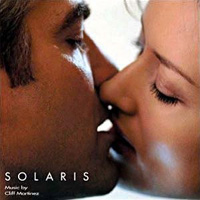 Solaris (2002)
Cliff Martinez: Is That What Everybody Wants
Director: Steven Soderbergh
Composer: Cliff Martinez
Get it from Amazon
Perfectly matching the understated visuals and narrative of the film, Cliff Martinez’ ambient score is an exercise in pure artistic synchronicity. Using Javanese gamelan, celesta, muted steel drums and slow shifting tone colors along with more traditional strings and horns, the ghostly score perfectly captures the remoteness and subtle poignancy of the film’s narrative. A bit of a departure at the time from the former drummer for Captain Beefheart and the Red Hot Chili Peppers. It’s a beautiful, timeless and sublime piece of work and like the score for Memento above, still a touchstone soundtrack for indie directors looking to appropriate some of that ambient existential angst for their own projects.
 Assault On Precinct 13 (1976) / Halloween (1978) / The Thing (1982) / Escape From New York (1981)
John Carpenter: Assault On Precinct 13 (Main Title)
Director: John Carpenter
Composer: John Carpenter (Ennio Morricone for The Thing)
Get it from Amazon
I love John Carpenter even though his films are pretty patchy in quality (apart from Halloween which is definitive). When I was growing up in the 80s, his movies would regularly play on late night TV and I’d stay up late to watch them. It was also a boom time for early ‘home entertainment’ when classics like Evil Dead and The Shining were becoming available to rent on VHS from the local video store. I remember the thrill of watching loads of Carpenter back then – Christine, The Fog, The Thing…there’s something very moody about his opening credit sequences that takes me right back to being 13 again. For me part of the appeal lies in that whole minimal atmospherics thing which was actually largely due to budget and time constraints at the time. I couldn’t really pick one film in particular, but the scores for the above four are probably my favourites. Maybe Escape From New York for consistency: big thick warm vintage synths and darkly humorous lyrics (“…stab a priest with a fork, and you’ll spend your vacation in New York.”)
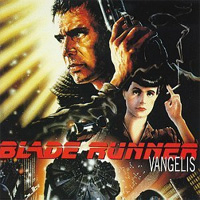 Blade Runner (1982)
Vangelis: Fading Away
Director: Ridley Scott
Composer: Vangelis
Get it from Amazon
One of my favourite scores from possibly my favourite movie (depending on what day you ask me). I suppose it’s a bit of an obvious contender but this score is just so damned evocative and lush; one of the most perfect and timeless combinations of visuals and music. And I’m not a particularly big Vangelis fan either (a bit too new-agey for me usually). Maybe as with the John Carpenter scores above, it could be the powerful associations of childhood memories attached to watching the film that trigger things in me. Either way it’s another great example of music matching the visuals perfectly. If you’re going to get the soundtrack, try and hunt down the 5 CD Esper edition, or failing that the 3CD version in the link above.
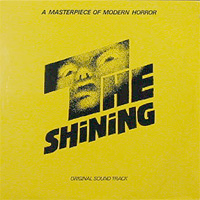 The Shining (1980) / 2001 A Space Odyssey (1968)
Wendy Carlos & Rachel Elkind: Rocky Mountains
Director: Stanley Kubrick
Composer: Various Artists
It was a toss up between these two Kubrick masterpieces. In the end I went for The Shining, but both are equally fantastic combinations of image and music. Stanley Kubrick had a tendency to not use one specific composer but rather just the individual pieces of music that fit the film, regardless of who wrote it. Using a mix of experimental electronic Moog soundscapes and modernist classical music, The Shining features artists including Wendy Carlos, Rachel Elkind, Kryzysztof Penderecki, Gyorgi Ligeti and Bela Bartok to create a deathlessly iconic soundtrack and movie. There’s a continuous unsettling air of dread and disturbing atmosphere subtly humming like dormant electricity throughout the entire film, from the initial flyover of the Rocky Mountains through to Jack’s gradual breakdown into insanity. It’s one of those films that are just inseparable from the soundtrack.
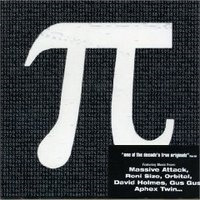 Pi: Faith In Chaos (1998)
Clint Mansell: 2 Pi R
Director: Darren Aronofsky
Composer: Clint Mansell
Get it from Amazon
Another pivotal moment (for me at least) in modern independent cinema, Aronofsky’s moody and atmospheric film probably has a few holes in the mathematical technicalities (“A paranoid mathematician searches for a key number that will unlock the universal patterns found in nature”) but it’s full of beautiful grainy noir visuals, paranoid conspiracies and Clint Mansell’s hard edged distinctive electronic music (Mansell was frontman with late 80s alt/techno/industrial band Pop Will Eat Itself and has gone on to become a highly regarded modern film composer). Also, another good example of a successful director/composer partnership (Mansell went on to score Aronofsky’s Requiem For A Dream and The Fountain among many others).
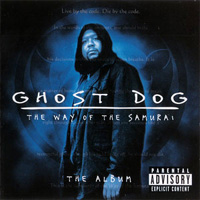 Ghost Dog (1999)
RZA: Ghost Dog Main Titles
Director: Jim Jarmusch
Composer: RZA
Get it from Amazon
When RZA nails it, he really nails it. His music can occasionally be hit and miss, but on Ghost Dog he gets it right from the off (and some of the Afro Samurai soundtrack is also pretty cool). Those ghostly lo-fi hip hop beats and spectral string samples are his trademark sound and put here to stellar use against Jarmusch’s existential story of modern-day assassins and Japanese mythology. The opening titles set the subdued tone perfectly for the rest of the movie – I definitely have a pull towards films where not much appears to be happening on the surface but quietly boiling underneath. Also, I’ve been listening to hip hop for over 20 years now and it’s always been a perfect genre for cinematic imagery and wordplay – yet it still amazes me that even today, there are a few who refuse to even acknowledge it as a valid musical form, especially other film composers who would prefer it to be all quill and manuscript.
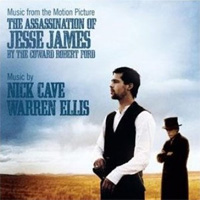 The Assassination Of Jesse James By The Coward Robert Ford(2007)
Nick Cave & Warren Ellis: Falling
Director: Andrew Dominik
Composer: Nick Cave and Warren Ellis
Get it from Amazon
After a short period of being generally uninspired by recent films and scores, this beautiful elegiac and atmospheric film brought it all back home again. Again, it’s one of those films where large sections just drift by with not much apparently happening, but the camera is allowed to linger on the actors’ faces and stunning photography. Nick Cave and Warren Ellis provide a haunting and intimate close-sounding score of piano, violin and guitar. Brad Pitt was on fine form in the film but the show was completely stolen by Casey Affleck who was mesmerising as Robert Ford and rightly nominated for several awards. One of the best films I’ve seen in a long time.
OK, that’ll do for now. Obviously, the above 10 are just an arbitrary selection of some of my favourites, so here’s a few more inspirations that could have been contenders:
Monster’s Ball : Asche & Spencer
The Hours/Koyaanisqatsi : Philip Glass
The Player/American Beauty : Thomas Newman
Syriana : Alexandre Desplat
Alien/Capricorn One : Jerry Goldsmith
Red Dragon : Danny Elfman
Taxi Driver/Psycho : Bernard Herrmann
Thunderball/You Only Live Twice : John Barry
Amelie : Yann Tiersen
Get Carter : Roy Budd
Lawrence Of Arabia : Maurice Jarre
Paris, Texas : Ry Cooder
Three Days Of The Condor – Dave Grusin
The Usual Suspects – John Ottman
Updated: See my follow up list of another 10 classic atmospheric film scores here.